 Camfident
How to Transition from Faceless Videos to Talking on Camera
Burhan Çelebi · Updated 2026-11-14 · 5 min read

Yes, you can absolutely start creating videos without showing your face, and gradually transition to talking on camera at your own pace. Beginning with screen shares, b-roll footage, and voiceovers allows you to master storytelling, pacing, and audio editing before introducing on-camera visibility.
The pressure to immediately show your face on social media causes many aspiring creators to quit before they even start. If recording yourself on video feels paralyzing today, forcing yourself to publish talking-head clips will only increase burnout and performance dread.
A gradual, tiered approach removes performance pressure while building momentum. This transition guide supports our foundational roadmap on how to get over your fear of being on camera, giving you a sustainable path from behind the scenes to in front of the lens.
Comparison: Faceless Videos vs. Talking-Head Videos
Both content formats have distinct advantages. Understanding their strengths helps you leverage both during your creative evolution.
| Content Dimension | Faceless Video Format | On-Camera Talking Video |
|---|---|---|
| Production Barrier | Low; requires no makeup, lighting setups, or hair styling | Moderate; requires clean eye-level framing and soft lighting |
| Performance Anxiety | Near zero; you can record voiceovers in multiple takes | High initially; requires managing physical and vocal presence |
| Trust & Brand Loyalty | Slower to establish; audience connects primarily to ideas | Rapid; human faces trigger immediate emotional connection |
| Scalability | Easy to outsource or assemble using stock footage | Uniquely personal; cannot be easily automated or replicated |
| Ideal Starting Point | Perfect for nervous beginners building initial consistency | The long-term gold standard for authentic authority |
Why showing your face builds deeper audience trust
While faceless accounts can achieve massive followings in entertainment and curation niches, talking on camera creates an unmatched competitive moat for educators, founders, coaches, and freelancers.
Neuroscience shows that the human brain has a region—the fusiform face area (FFA)—that responds far more strongly to faces than to other objects, which helps explain why faces grab our attention so quickly. Research by neuroeconomist Paul Zak also suggests that emotionally engaging, character-driven stories can trigger the release of oxytocin, a brain chemical linked to empathy and trust. A real person telling a real story on camera gives viewers both.
Seeing a real person speak creates authentic connection that stock footage, text overlays, and AI voiceovers simply cannot match. Showing your face proves there is a living human being standing behind the message.
5 easy faceless video formats for beginners
Before turning the camera on yourself, practice creating value using these five engaging faceless styles:
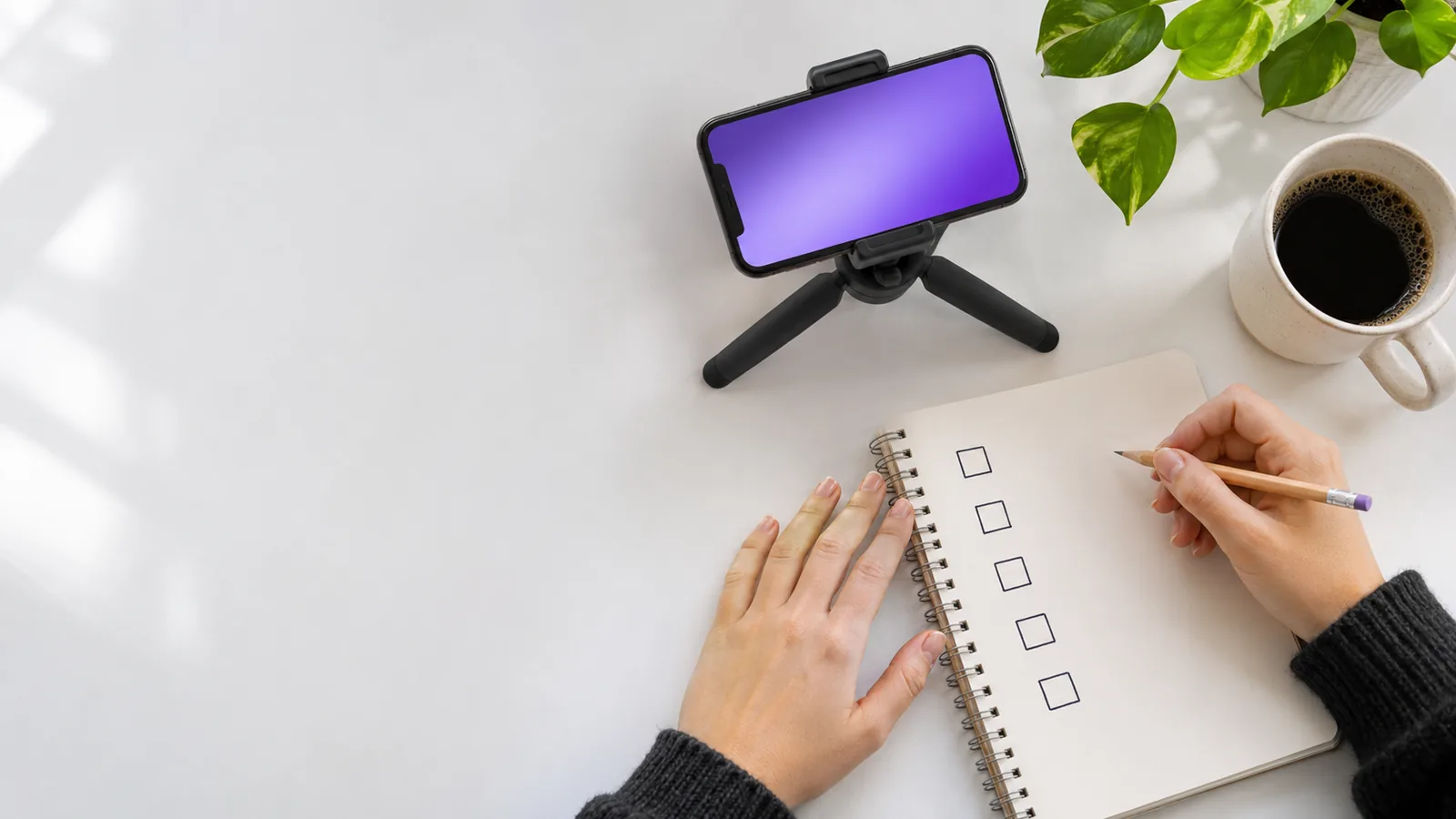
- The Over-the-Shoulder Demonstration: Film your hands drawing a diagram, assembling a recipe, or taking notes in a journal while speaking in voiceover.
- The Screen-Recording Tutorial: Record your computer or iPad screen while demonstrating software tools, design workflows, or spreadsheet hacks.
- The "B-Roll with Voiceover": Film 5-second aesthetic clips of everyday scenes—brewing morning coffee, walking in a park, typing on a laptop—and overlay a thoughtful personal voiceover.
- The Carousel Slide Presentation: Design clean, slide-based graphic cards and record yourself explaining each point as you click through them.
- The Book / Product Highlight: Hold a favorite book or physical product in frame, pointing out key sentences or design features with your fingers while speaking. If you need inspiration for what topics to cover, explore our list of 15 first video ideas for beginners.
A 5-stage roadmap to transition from faceless to on-camera
Follow this progressive desensitization pathway to move toward on-camera presentation without feeling overwhelmed.
- Stage 1: Voiceover Only (Behind the Mic): Create three to five faceless videos using your real voice. Focus entirely on speaking with clear cadence, warm tone, and thoughtful pauses.
- Stage 2: Hands and Context in the Frame: Introduce your physical presence subtly. Show your hands typing, holding a notebook, or gesturing over a desk while explaining a concept.
- Stage 3: The Blurred Screen Milestone: Practice speaking toward your front-facing phone camera, but blur your preview so you cannot scrutinize your reflection. This is the exact philosophy behind Day 1 of our 5-day plan for camera-shy creators: training yourself to talk to the device without visual self-judgment.
- Stage 4: The 5-Second Intro Cameo: In an otherwise faceless video, record a brief 5-second on-camera introduction delivering your opening hook. Once the hook finishes, cut immediately to screen recordings, slides, or b-roll for the remainder of the clip.
- Stage 5: The Full Talking-Head Take: Transition to recording a complete 45- to 60-second video where you speak directly to the camera from start to finish.
In Camfident, this gradual journey is built into the app's structure. You can begin on Day 1 with a blurred screen and a private "delete without watching" option, allowing you to transition toward full on-camera takes without ever having to post before you are ready.
Frequently Asked Questions
Can a faceless channel make money?
Yes. Many successful faceless channels generate substantial revenue through affiliate marketing, digital products, and sponsorships. However, accounts featuring a visible founder or expert generally command higher consulting rates, speaking engagements, and brand trust.
Do I have to show my full face all at once?
No! Many creators start wearing glasses, filming from an angle, or showing side profiles. You can ease into the spotlight in whatever manner feels safest for you.
What if my friends or family see my videos?
The fear of being judged by acquaintances is common. Remember that people who criticize others for creating content are usually projecting their own creative insecurities. High-value, helpful content always earns respect over time.
How long should I stay faceless before making the switch?
There is no deadline. Some creators transition within two weeks, while others spend six months mastering voiceover storytelling before stepping in front of the lens. Honor your personal pace.
Starting faceless is not a compromise; it is a smart, strategic foundation. Master your voice, build your confidence behind the scenes, and step into the light when you are ready. Your audience will be waiting to meet you.
Related articles
Sources
- Kanwisher, N., McDermott, J., & Chun, M. M. (1997). The fusiform face area: A module in human extrastriate cortex specialized for face perception. Journal of Neuroscience, 17(11), 4302–4311. Society for Neuroscience
- Zak, P. J. (2015). Why inspiring stories make us react: The neuroscience of narrative. Cerebrum: The Dana Forum on Brain Science, 2015, 2. PubMed